
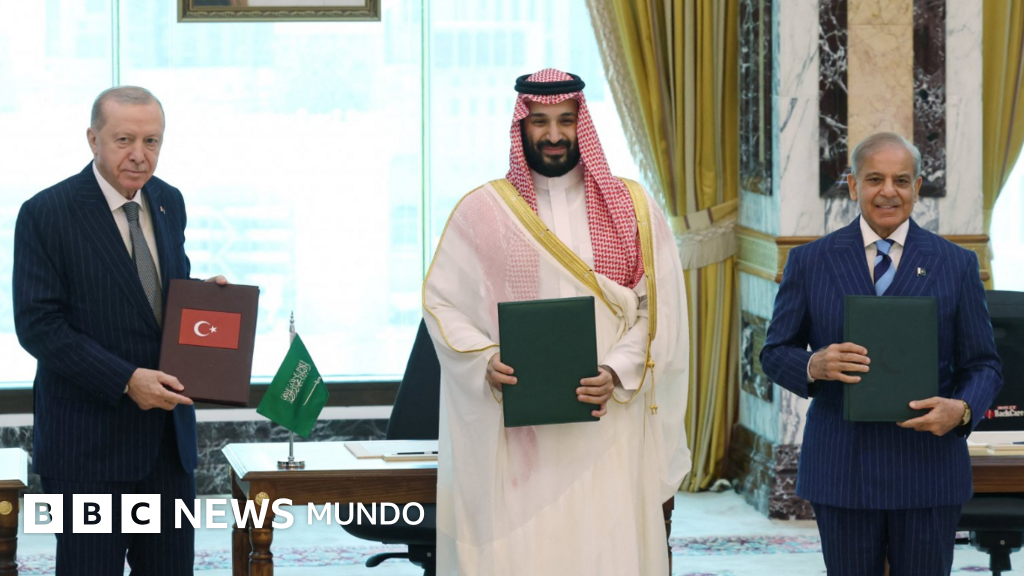
In a significant move to bolster regional security, Saudi Arabia, Turkey, and Pakistan have signed a mutual defense agreement during a meeting in Mecca. This pact establishes that any attack against one of the three nations will be viewed as an attack against all, aiming to enhance collective deterrence against aggression.
Details of the Agreement
The agreement was announced by Saudi Crown Prince Mohammed bin Salman, Turkish President Recep Tayyip Erdogan, and Pakistani Prime Minister Shehbaz Sharif. It is designed to strengthen defense cooperation among the three powerful Muslim-majority countries.
According to a joint statement, the pact aims to “reinforce collective deterrence against any act of aggression,” stipulating that any armed attack on one of the states will be considered an attack on all three. The agreement also includes provisions for enhancing various aspects of defense collaboration.
Context and Motivations
This trilateral defense pact comes amid rising tensions in the region, particularly due to the ongoing confrontations involving the United States and Israel against Iran. The Strait of Hormuz, a vital maritime route for oil transportation, has been a focal point of these tensions, with recent disruptions affecting shipping activities.
Last year, Saudi Arabia and Pakistan had already initiated a separate defense agreement, indicating a growing trend towards military collaboration in the region. The current pact serves as an extension of these efforts, reflecting the need for enhanced security measures in light of recent Iranian aggression, including attacks on Saudi oil facilities and maritime threats in the Red Sea.
Strategic Benefits for Each Nation
Each country involved in the pact stands to gain unique advantages:
- Saudi Arabia: The agreement provides an additional layer of security amid a shifting regional security landscape impacted by U.S. and Israeli actions against Iran.
- Pakistan: With long-standing tensions with India, the pact offers Pakistan economic support from Saudi Arabia and military capabilities from Turkey, enhancing its strategic position in the region.
- Turkey: The agreement opens opportunities for Turkey’s defense industries through joint production, technological alliances, and increased military interoperability.
Implications for Regional Security
Abdulaziz Sager, president of the Gulf Research Center, emphasized the symbolic significance of the agreement, particularly in a climate of regional uncertainty and instability. He noted that if institutionalized effectively, this trilateral framework could enhance the diplomatic and defensive clout of the three nations and contribute to a more regionally-driven security architecture.
Experts suggest that while the pact focuses on defense, it does not specify the obligations of each member state. A Turkish official described the agreement as “purely defensive,” indicating a commitment to mutual support without detailing specific military commitments.
Conclusion
The signing of this mutual defense pact among Saudi Arabia, Turkey, and Pakistan marks a pivotal moment in Middle Eastern geopolitics, reflecting a growing trend towards military alliances in response to external threats. As these nations navigate complex regional dynamics, the effectiveness of this agreement will depend on its implementation and the willingness of each state to collaborate closely in defense matters.



Deja una respuesta