
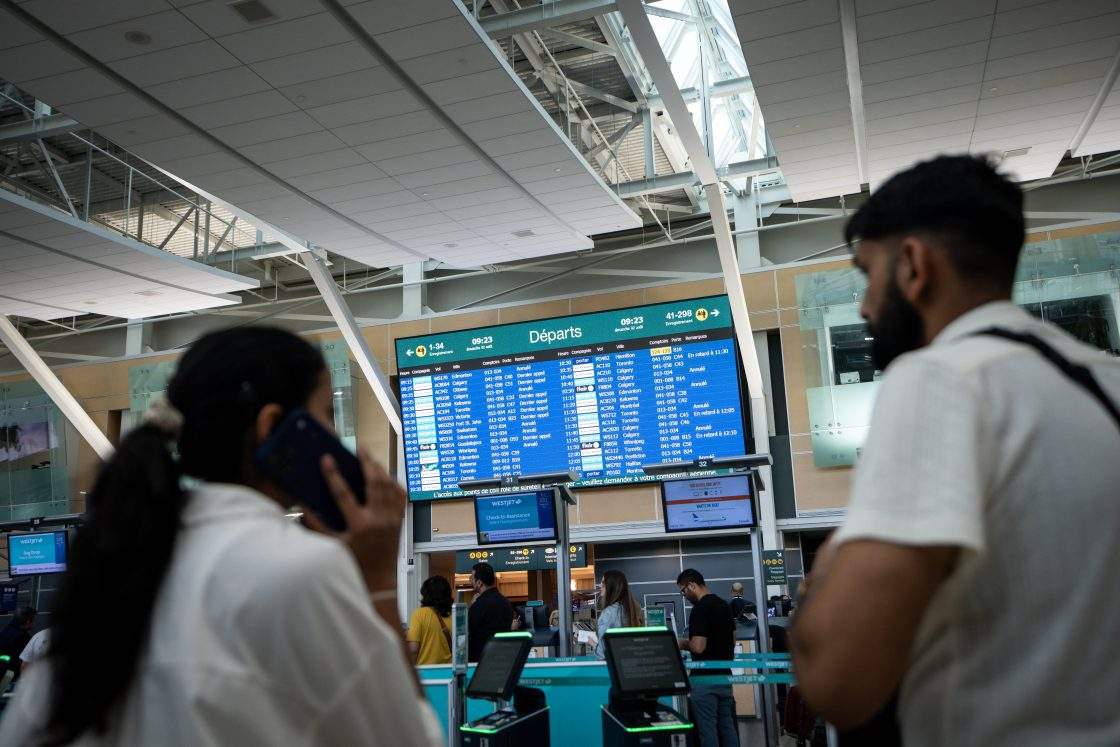
Statistics Canada has released new data indicating a 3.3% increase in domestic travel for July compared to the same month last year. This rise comes as travel to the United States has notably decreased, with trans-border passenger traffic falling by 8.7% in July.
The agency highlighted that this decline in cross-border travel is significantly lower than the figures recorded in July 2024, which saw a decrease of 12.5%.
Airport Traffic Trends
In July 2026, three of Canada’s largest airports reported declines in passenger traffic:
- Vancouver International: -4.5%
- Montréal/Pierre Elliott Trudeau International: -2.0%
- Calgary International: -0.1%
Conversely, international screened passenger counts increased by 6.2% from July 2023, indicating a recovery in international travel.
Shifts in Travel Behavior
Canadians have begun to resume travel to the U.S. after experiencing 15 months of low travel rates, primarily due to heightened tensions between the two countries. Notably, April marked the first month of increased travel to the U.S. since January 2025.
The decline in travel to the U.S. has also impacted Canadian spending, which dropped by $3.3 billion in 2025, attributed to the ‘Buy Canadian’ movement. Statistics Canada reported that Canadians shifted their leisure travel preferences away from the U.S., with a 21.5% decrease in visits (approximately 3.2 million fewer visits) to the U.S. in favor of overseas destinations, which saw a 12.2% increase (around 1.1 million additional visits).
Overall Travel Spending
In total, Canadian travel spending to the U.S. amounted to $18.8 billion in 2025, while spending on overseas travel reached $81.3 billion.



Deja una respuesta