
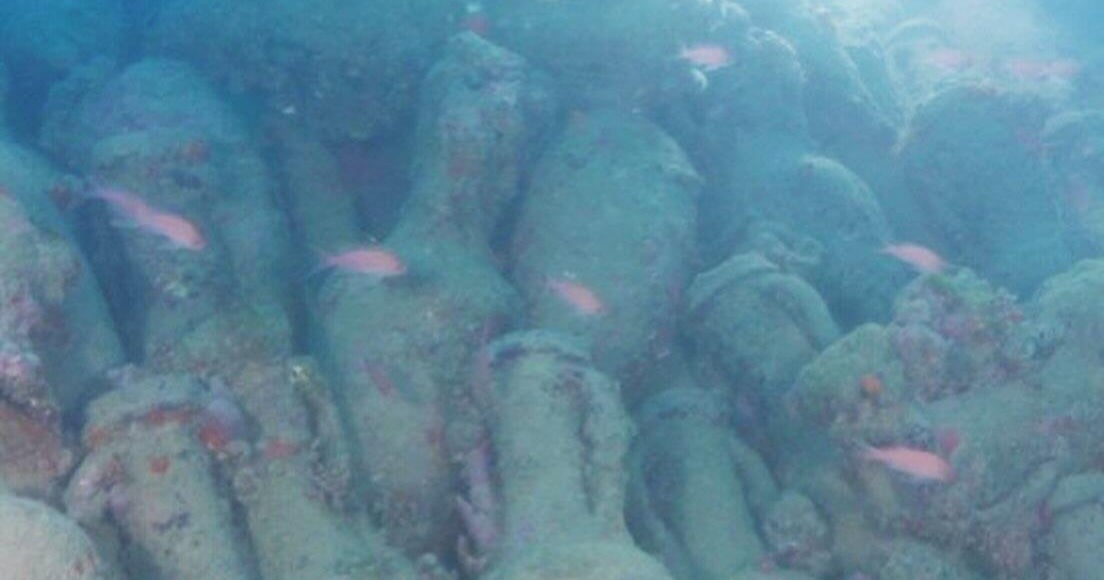
In a remarkable archaeological find, Italian divers have discovered the wreck of a Roman ship, estimated to be around 2,100 years old, off the coast of Sicily. The site, located approximately three miles from Mazara del Vallo, is reported to be filled with hundreds of well-preserved clay jars, known as amphorae, which were likely used for transporting wine.
The discovery, hailed by Italy’s Culture Minister Alessandro Giuli as «one of the most important underwater archaeological discoveries of recent years,» occurred at a depth of about 150 feet following a tip from local fishermen.
Details of the Discovery
Divers from the cultural heritage protection unit of Palermo’s police announced the find, which is believed to date back to between the 2nd and 1st centuries BC. The shipwreck measures approximately 21 meters long and 6 meters wide and primarily carried Dressel 1A amphorae, a type of tall and cylindrical jar commonly used in ancient times for wine transport.
Fisherman’s Encounter
The initial discovery was made by underwater fisherman Giacomo De Mola, who noticed an unusual formation on his boat’s underwater scanner. Describing the moment he dove into the water, De Mola recounted, «Visibility wasn’t the best… I got closer. And my heart stopped. Below me was a vast expanse of amphorae.» He shared his experience in an Instagram post, which included video footage of the site.
Upon realizing the significance of his find, De Mola promptly reported it to the Superintendent of the Sea of the Sicilian Region. Reflecting on his experience, he stated, «It’s hard to explain what it feels like to be among the first human beings, after almost twenty centuries, to see that place again.»
Significance of the Find
This shipwreck provides valuable insight into ancient Roman maritime trade and the transportation of goods, particularly wine, during that era. The well-preserved state of the amphorae suggests that the vessel may offer further information about Roman shipping practices and trade routes in the Mediterranean.
As archaeological teams prepare for further exploration and excavation of the site, this discovery is expected to attract significant interest from scholars and historians alike, shedding light on the rich maritime history of ancient Rome.



Deja una respuesta