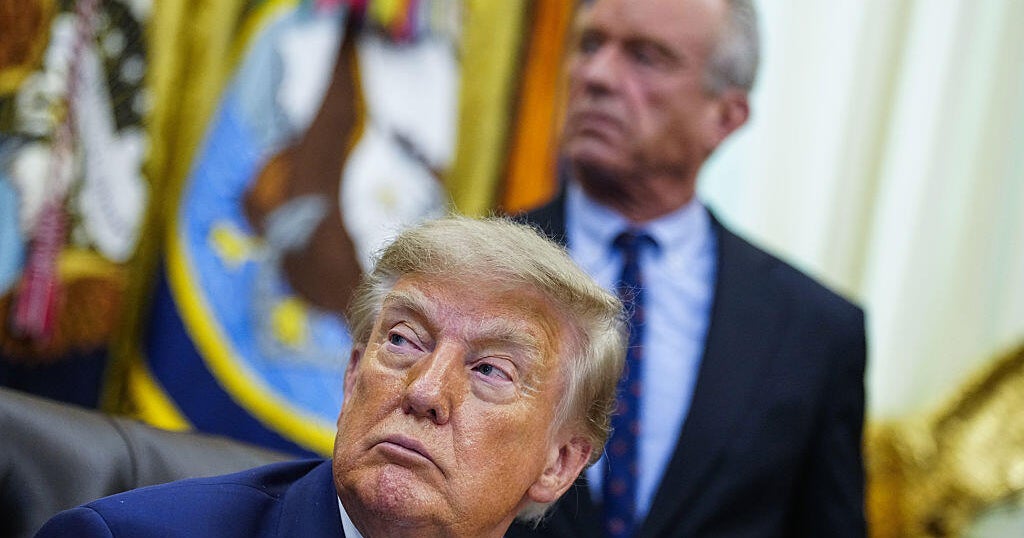
As the midterm elections approach, the Trump administration’s health initiatives, particularly those championed by Health and Human Services Secretary Robert F. Kennedy Jr., are under scrutiny. During a recent event at a 400-acre apple orchard in Michigan, Republican Rep. Tom Barrett praised the administration’s efforts to improve American diets, including the removal of certain artificial dyes from food products. However, many of these initiatives rely on voluntary agreements that lack the enforcement mechanisms of traditional federal regulations.
Voluntary Agreements and Their Limitations
While the goals of these initiatives, such as lowering drug prices and enhancing nutrition education for healthcare providers, resonate with a broad audience, their implementation remains vague. Critics argue that the absence of stringent oversight makes it challenging to assess progress. Larry Levitt, executive vice president for health policy at KFF, emphasized the lack of transparency surrounding these deals, stating, «These deals are often not transparent, so there’s no way for the public to judge how meaningful they are.»
Artificial Dyes Initiative
One of the administration’s high-profile initiatives involves the removal of petroleum-based synthetic dyes from food and drugs. In April 2025, Kennedy announced agreements with food manufacturers, claiming they would phase out nine synthetic dyes. However, a year later, it became evident that progress was slow. Although the FDA initially set a deadline for the end of 2026, it was later extended to 2027, with only a fraction of companies meeting their commitments.
- As of December 2025, only seven out of 27 companies had fulfilled their pledges to eliminate six specific synthetic dyes.
- Major corporations like Coca-Cola and Unilever have not made concrete commitments to remove these dyes.
- No pharmaceutical companies have publicly announced plans to eliminate dyes from their products.
Leslie Dach, chair of Protect Our Care, criticized the administration’s approach, stating, «It’s just all talk. They just govern for a day of publicity, and then it’s over. None of it happens.» This sentiment reflects growing skepticism about the administration’s ability to effect meaningful change.
Healthcare Services and Insurance Deals
In another initiative, Kennedy and Centers for Medicare & Medicaid Services Administrator Mehmet Oz announced that major insurers had agreed to reduce prior authorization requirements for healthcare services. The administration claimed that 80% of insurers would implement changes by January 2026. However, as of July, health plans had only reduced prior authorization requirements by approximately 11%, and no public dashboards to track progress have been established.
The American Medical Association’s survey revealed that only one in three doctors believed these voluntary pledges would lead to significant improvements in patient care. This skepticism is compounded by the fact that similar promises made during the previous Trump administration did not materialize, with many doctors reporting an increase in prior authorization requests.
Drug Pricing Agreements
The Trump administration has also entered into voluntary agreements with pharmaceutical companies to lower drug prices. Seventeen companies, including Pfizer and AstraZeneca, have pledged to reduce prices for Medicaid enrollees and cash-paying consumers through the TrumpRx platform. However, these agreements apply only to new drugs and do not address existing medications used by the majority of Americans with private insurance.
Despite the limited scope of these agreements, Trump has touted them as historic successes, claiming they represent the largest drug price cuts in history. Analysts note that the positive market reactions from drugmakers following the announcements may be attributed to the narrow nature of the deals, which do not threaten overall profits.
Conclusion
As the midterm elections draw near, the effectiveness of the Trump administration’s health initiatives remains uncertain. While the voluntary agreements may appeal to voters who favor reduced regulation, their lack of enforcement raises questions about their long-term impact on public health. With the administration’s claims of success facing scrutiny, voters will need to consider whether these initiatives will lead to meaningful change or fade into obscurity once political attention shifts.



Deja una respuesta