
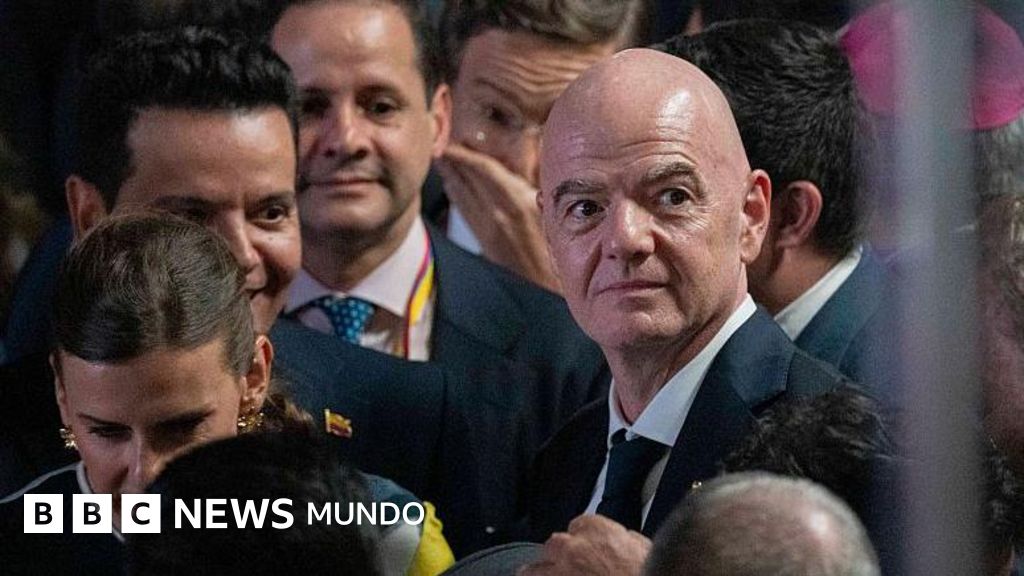
Gianni Infantino, the current president of FIFA, recently arrived in Cali, Colombia, where he was greeted on the tarmac by Ramón Jesurún, president of the Colombian Football Federation. This meeting was not for a conventional gathering but rather to attend the inauguration of Colombia’s new president, Abelardo de la Espriella. Infantino’s presence, alongside Alejandro Domínguez, president of CONMEBOL, highlights the significant political connections he maintains within the realm of football.
Infantino’s Strategic Alliances
Infantino’s role as FIFA president involves navigating relationships with some of the world’s most powerful figures, notably his past association with former U.S. President Donald Trump. Before facing a significant scandal related to the FIFA Forward Enterprise, Infantino was perceived as a nearly untouchable figure in football governance. However, following an apology and a controversial proposal to sell a stake in the men’s World Cup to private equity firms, Infantino is now on a quest to restore his standing.
Traveling Like a Statesman
Infantino’s travel arrangements resemble those of a head of state, often involving a convoy of dark-windowed Mercedes vehicles and police escorts. Recently, he traveled to FIFA’s headquarters in Rabat, Morocco, where he convened a few council members to discuss his plan to offer 21% of FIFA’s commercial and ticketing operations to a private investment firm. His travels are facilitated by a private jet provided by Qatar Airways, which allows him to undertake multiple daily flights and attend various global football events.
Financial Aspects of Leadership
As the leader of the world’s most popular sport, Infantino’s salary has increased significantly since his election in 2016. He now earns approximately $5 million annually, including a base salary of $2.9 million and a confirmed variable bonus of $2.4 million. Additionally, he receives an annual per diem of $27,600 to cover living expenses. Infantino argues that his compensation is justified by the record revenues he has generated for FIFA and its member associations.
Controversies and Criticisms
Infantino’s close relationship with Trump has raised eyebrows, particularly as it seems to conflict with FIFA’s political neutrality. For instance, Infantino was criticized for arriving late to a FIFA Congress in Paraguay after a diplomatic tour with Trump. Furthermore, the awarding of a FIFA Peace Prize to Trump occurred shortly before U.S. military actions in Venezuela and Iran, drawing significant backlash.
Despite the controversies, Infantino has maintained a low profile in media interactions, often avoiding independent inquiries into his methods and decisions. He has only conducted two press conferences in the past four years, both held prior to World Cup events. His responses to criticism have often been limited to FIFA’s official channels, allowing him to control the narrative surrounding his presidency.
Future Challenges and Prospects
While Infantino has garnered support from many global football associations, particularly outside Europe, his leadership is now under scrutiny. The UEFA has threatened to boycott FIFA tournaments, and the fallout from the failed investment plan raises questions about Infantino’s future. Despite this, he continues to receive backing from various member associations, with 111 already expressing support for his re-election before the upcoming World Cup.
As the landscape of global football governance evolves, Infantino’s ability to navigate controversies while maintaining his influence will be critical in determining his legacy and the future of FIFA.


Deja una respuesta