
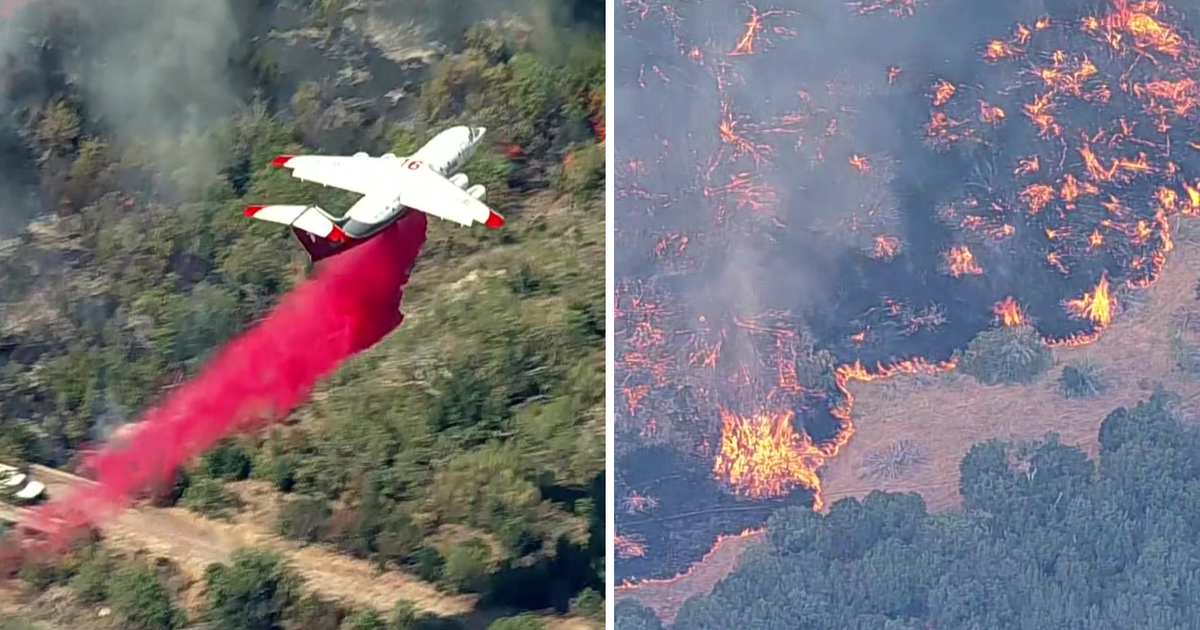
A wildfire that ignited near Ross in Palo Pinto County has rapidly expanded, now covering at least 85,000 acres and is 26% contained as of Thursday night. The fire, which began on Monday afternoon, has led to mandatory evacuations in neighboring Jack County and has impacted local schools, according to officials in North Texas.
Current Situation of the Ross Fire
The Ross Fire is now recognized as the second-largest wildfire in North Texas, burning primarily in Palo Pinto and Jack counties, near U.S. 180 and FM 919. Initially estimated at just 25 acres, the fire has escalated dramatically, prompting emergency responses.
Evacuations and School Closures
Residents in Jack County along County Road 2210 toward Highway 281 were ordered to evacuate on Tuesday. However, these mandatory evacuations were lifted the following morning as conditions improved. Jack County Emergency Management has cautioned returning residents to remain vigilant, as the fire continues to pose a threat in neighboring Palo Pinto County.
Local schools have also been affected by the wildfire. Jacksboro ISD delayed the start of classes by two hours on Tuesday, resuming normal operations on Wednesday. Perrin CISD canceled classes for Tuesday and delayed the start of school to 10 a.m. on Wednesday. Additionally, Bryson ISD and Graford ISD were instructed to cancel classes on Wednesday due to the fire.
Impact on Structures and Livestock
Reports indicate that four to five structures have sustained damage, with more at risk as the fire continues to burn. The Longhorn Council of Scouting America reported catastrophic damage to several buildings at Worth Ranch in Palo Pinto, although no scouts or campers were present at the time of the fire. The camp ranger, Pat Adams, was safely evacuated.
In response to the wildfire, the Graham Livestock Commission has offered temporary shelter for displaced livestock at the Old Mineral Wells Sale Barn. The Humane Society of North Texas is also assisting by clearing space at the Mineral Wells Animal Shelter to accommodate pets displaced by the fire, with 12 dogs and 26 cats expected to arrive on Wednesday.
Firefighting Efforts and Road Closures
The Texas Intrastate Fire Mutual Aid System (TIFMAS) Strike Team, along with the Texas A&M Forest Service, is actively engaged in firefighting efforts, utilizing dozers and aircraft. U.S. Highway 180, which was closed to all traffic between South FM 4 and FM 919, has since reopened.
A Temporary Flight Restriction is currently in place over the fire area to ensure safety during firefighting operations.
Factors Contributing to High Wildfire Risk
The National Weather Service has attributed the elevated wildfire risk in North Texas to several factors, including dry vegetation, a lack of measurable rainfall, and gusty winds. With over a month without significant rainfall, fine surface fuels have become critically dry, making vegetation more susceptible to ignition and allowing fires to spread rapidly. Residents are advised to avoid outdoor activities that could generate sparks or flames.



Deja una respuesta