
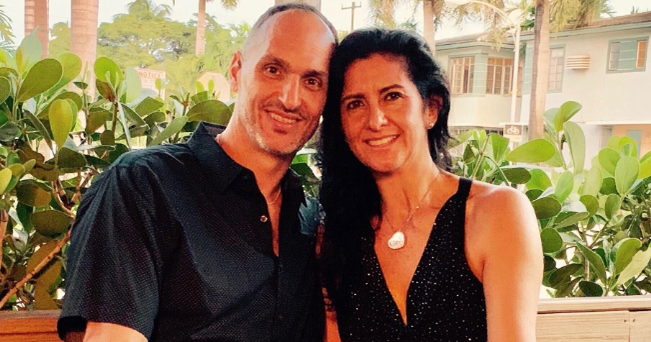
On August 8, 2025, Todd Meiklejohn, an adult education teacher, began his day like any other, preparing for an early morning meeting. However, his routine took a sudden turn when he experienced a severe, squeezing pain and subsequently lost mobility on his right side. Despite being conscious, he was unable to comprehend the situation as he struggled to stand after collapsing.
About 45 minutes later, his wife, a nurse, returned home and found him on the floor. She immediately called 911, leading to a rapid response that transported Meiklejohn to the Miami Neuroscience Institute at Baptist Health. There, doctors quickly diagnosed him with a massive stroke, emphasizing the critical nature of time in stroke treatment.
Timely Intervention Saves Lives
Dr. Guilherme Dabus, the interventional neuroradiologist who treated Meiklejohn, explained that strokes occur when blood flow to the brain is interrupted, leading to oxygen deprivation and potential brain damage. In Meiklejohn’s case, a mechanical thrombectomy was performed just 38 minutes after the emergency call, allowing doctors to remove the clot and restore blood flow to the brain.
Thanks to the swift medical intervention, Meiklejohn experienced minimal permanent damage and was able to regain speech and movement shortly after surgery. He was discharged from the hospital within 48 hours, a recovery that Dr. Dabus described as «amazing.» Meiklejohn himself reflected on the experience, stating, «I’m one of the lucky patients to say I’m blessed, that I was able to walk out and tell this story.»
Uncovering the Cause of the Stroke
Following the immediate crisis, medical professionals sought to understand the underlying cause of Meiklejohn’s stroke. Despite being in excellent health for his mid-50s, tests ruled out the possibility of a blood clot traveling from his leg to his brain. Eventually, scans revealed a heart defect known as patent foramen ovale (PFO), a small opening between the heart’s upper chambers that fails to close after birth.
Dr. Eihab Ghantous, a cardiologist, noted that while PFOs are common and often harmless, they can, in rare instances, allow blood clots to bypass the lungs and travel to the brain, leading to a stroke. Dr. Dabus confirmed that this was the case for Meiklejohn, stating that the clot had been «almost ejected out» of the heart.
A Path to Recovery
After identifying the PFO, Meiklejohn underwent a minor procedure to close the defect, which was successful. Dr. Dabus assured him that the likelihood of experiencing another stroke was now very low. Since then, Meiklejohn has dedicated himself to recovery, focusing on rebuilding his endurance and muscle strength. Remarkably, he returned to work just four weeks post-surgery and completed a 100-mile bike ride two months later.
Despite his recovery, Meiklejohn carries scars from the incident and remains vigilant about monitoring his blood pressure and heart rate. He often reflects on how different circumstances could have been if his wife had not come home when she did, expressing gratitude for her timely return. «Thank God, she came back,» he said.
Raising Awareness
Meiklejohn is now committed to raising awareness about stroke treatment and the critical importance of quick action in such emergencies. He emphasizes that many people are affected by strokes, either directly or through loved ones, but the reality of the situation often remains abstract until it personally impacts someone. «One thing I learned is that, a lot of people are affected, or their mother, father, sister, brother. But until it happens to you, you have no idea,» he stated.


Deja una respuesta