
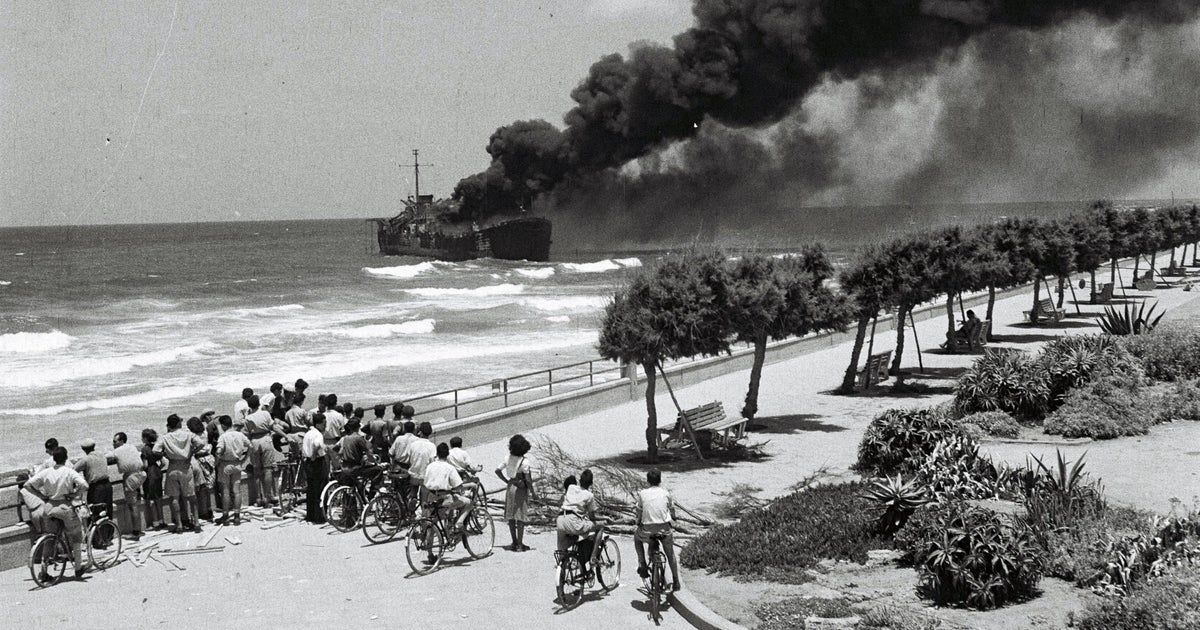
On Monday, Israel announced the recovery of the wreckage of the Altalena, an arms-smuggling ship that was sunk by the Israeli military shortly after the establishment of the state in 1948. This event not only marked a significant moment in Israel’s early history but also exposed deep-seated divisions that continue to resonate in contemporary Israeli society.
Background of the Altalena
The Altalena set sail from France, loaded with weapons intended for the Irgun, a militant Zionist group that conducted operations against British colonial authorities and the local Palestinian population in its pursuit of establishing Israel. In June 1948, under the orders of David Ben Gurion, Israel’s first prime minister, Israeli forces opened fire on the ship, ultimately sinking it off the coast of Tel Aviv. Ben Gurion’s decision was aimed at asserting his authority and preventing the emergence of any paramilitary rival to the newly formed Israeli military during a time of war with neighboring Arab states.
Details of the Discovery
Heritage Minister Amihai Eliyahu announced that the Altalena was located intact at a depth of 503 meters, west of the Israeli coast, 78 years after its sinking. He described the event as a painful yet seminal moment that shook the young state of Israel.
Casualties and Historical Significance
The sinking resulted in the deaths of sixteen Irgun members and three Israeli soldiers. Following the violence, Irgun’s leader, Menachem Begin, famously urged his fighters to surrender to Israeli authorities, stating, «There will be no civil war with the enemy at our gates.» This incident highlighted the internal conflicts between political factions that would shape the future of Israel.
Political Context
Begin later became prime minister in 1977, marking the rise of right-wing nationalism in Israel, which contrasted sharply with the socialist movement initiated by Ben Gurion. Eliyahu, who announced the recovery of the Altalena, is associated with the far-right political faction currently in power under Prime Minister Benjamin Netanyahu. He referred to the Altalena as a «deep national wound» and emphasized Begin’s historical responsibility in averting a civil war.
Public Reaction and Future of the Wreckage
In 2008, Israel erected a monument to honor the fallen members of the Altalena on the Tel Aviv seafront. The search for the wreckage has been ongoing for years, often conducted in secrecy. Following the discovery, the Ben Gurion Heritage Institute stated on social media that finding the Altalena should not reignite old disputes but serve as a reminder of the importance of statehood in Israel’s existence.
As of now, it remains unclear what will happen to the wreckage of the Altalena, but its recovery is expected to prompt discussions about Israel’s complex history and the divisions that have shaped its political landscape.



Deja una respuesta