
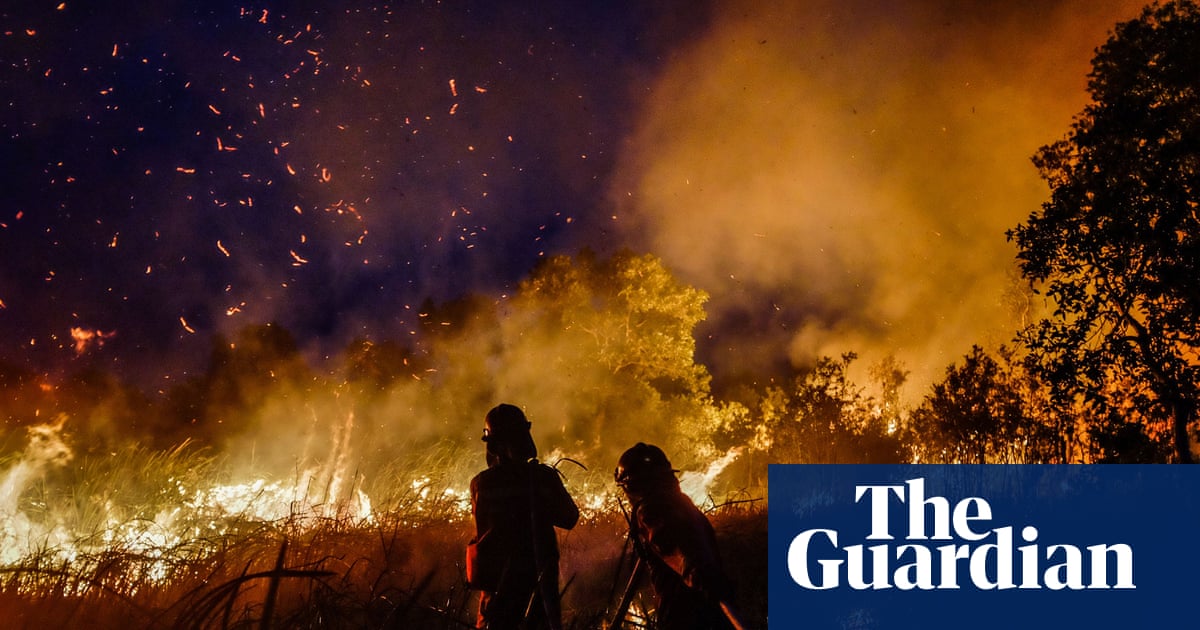
In the Indonesian region of Kalimantan, wildfires have devastated vast areas, leading to a severe haze that has affected air quality in neighboring countries, including Malaysia and Singapore. Residents like Suwadi describe the experience of stepping outside as akin to «smoking a cigarette,» with visibility reduced to just a few meters.
Health Crisis Amidst the Haze
The ongoing fires have resulted in a significant increase in respiratory issues among the local population. Health ministry data indicates that approximately 5,000 individuals have sought emergency care each week for respiratory symptoms since July, a stark rise from just 500 per week earlier in the year. This alarming trend raises concerns for vulnerable groups, including children, the elderly, and pregnant women.
While many schools have suspended classes, some parents are advocating for a shift to online learning to protect their children from the harmful effects of the smoke.
Causes of the Fires
The fires in Kalimantan are often attributed to the controversial “slash and burn” agricultural practices used to clear land for palm oil plantations, a sector in which Indonesia is the world’s largest producer. This year, the phenomenon of “super” El Niño is believed to be exacerbating the situation, with expectations that it will peak in September.
Experts warn that the dry season, which is expected to last until October, could prolong the fires, with significant rainfall not anticipated until November.
Regional Implications
The haze has escalated into a regional crisis, prompting Malaysia and Brunei to address the issue at the ASEAN level. On a recent day, Kuala Lumpur was reported as the most polluted city globally, followed closely by Jakarta. In Sarawak, Malaysia, nearly 600 schools were closed due to the hazardous air quality.
Social media has become a platform for Indonesians to raise awareness about the fires, which are not only affecting Kalimantan but also regions in Sumatra, West Papua, and Lombok, where a traditional village was recently destroyed.
Government Response and Public Frustration
In response to the escalating crisis, Indonesian President Prabowo Subianto has ordered the revocation of business permits for companies suspected of illegal land clearing. Additionally, police have arrested 72 individuals believed to be responsible for starting the fires, primarily for agricultural purposes.
Despite these actions, many citizens express frustration over perceived government inaction against corporations involved in the land clearing. Experts highlight that Indonesia’s unique peatland ecosystems, which are naturally resilient to fire, have been compromised by drainage systems designed for agricultural expansion. This has made fires on degraded peatlands particularly challenging to control, as they can burn deep underground and produce thick smoke.
Justin Sentian, a climate change professor, emphasizes the need for proactive measures rather than reactive responses to hotspots. He advocates for halting the conversion of peatlands and restoring degraded areas to prevent future disasters.
Local Concerns and Future Outlook
As fires continue to rage, residents like Suwadi fear for their safety and the future of their communities. With flames encroaching on homes, panic is spreading among the population. The situation remains dire, and the potential for further devastation looms as the dry season progresses.


Deja una respuesta