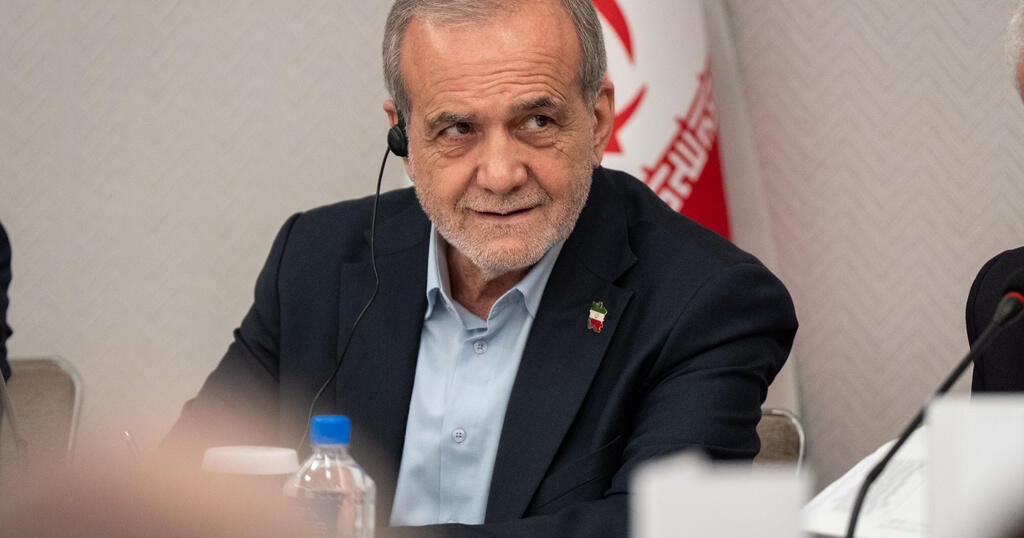
In a recent address, Iranian President Masoud Pezeshkian defended the memorandum of understanding signed with the United States in June, asserting it as the most viable option for Iran to navigate its current state of «neither war nor peace.» His remarks come amid heightened tensions and a new wave of U.S. sanctions aimed at crippling Iran’s economy.
Context of the Memorandum of Understanding
The memorandum, which set a 60-day deadline for resolving the conflict and addressing Iran’s nuclear program, has faced significant challenges. The deadline lapsed last week without any substantial progress, leading both parties to declare the agreement effectively abandoned. Key issues, particularly the reopening of the Strait of Hormuz, remain unresolved, complicating the situation further.
Iran’s Economic Struggles
Pezeshkian acknowledged the difficulties faced by Iranian citizens, stating, «I understand we have many problems in society right now. We are trying to prevent these as much as we can.» This admission follows the U.S. government’s announcement of a new sanctions campaign aimed at isolating Iran economically.
President Trump has characterized the sanctions as part of a broader strategy to bring about the «collapse» of the Iranian regime, intensifying the economic and military pressures on Tehran. Pezeshkian responded to these threats by highlighting the ongoing economic, military, and security war that Iran is engaged in due to U.S. actions.
International Reactions and Developments
In a related development, Mohsen Rezai, head of Iran’s Supreme National Security Council, warned that any country joining the U.S. in its sanctions against Iran would be deemed an enemy. This statement underscores Iran’s stance on the geopolitical ramifications of the ongoing conflict.
Meanwhile, diplomatic efforts continue, with Egypt’s foreign minister recently engaging in discussions with his Iranian counterpart to revive negotiations aimed at de-escalating the situation. The talks also included discussions about the management of the Strait of Hormuz, a critical waterway for global oil shipments.
Iran’s Energy Sector and New Discoveries
Despite the ongoing conflict, Iran announced the discovery of over 200 billion cubic meters of natural gas in the southern Fars province. Petroleum Minister Mohsen Paknejad described the gas as having low levels of hydrogen sulfide, which could reduce operational costs. However, experts suggest that any new production from this site is likely years away due to the current state of the energy sector, which has been severely impacted by U.S.-Israeli strikes.
Escalating Tensions and Cybersecurity Threats
In addition to military and economic pressures, Iran has also been implicated in cyberattacks, with reports indicating that Iranian hackers successfully shut down a power plant in the U.K. for four days. This incident highlights the multifaceted nature of the conflict, which extends beyond traditional military engagements.
Conclusion
As the situation in the Middle East continues to evolve, the implications of the U.S.-Iran conflict remain significant not only for the region but also for global stability. The failure to reach a diplomatic resolution raises concerns about further escalation and the potential for broader geopolitical ramifications.


Deja una respuesta